Directions for use:
Feed 10g per 100kg of body weight per day. A 25ml level scoop gives approximately 12.5g. There is a multilevel (5ml
-25ml) scoop included in this product for your convenience.
Precautions:
For animal use only. Introduce to the horse’s diet gradually, splitting total daily serving
between AM and PM feeds (when applicable). Serve dependent on the individual animal but
as a guide. Store indoors or under cover in a frost-free, cool dry place out of direct sunlight.
Replace lid after use. This product is not a Veterinary medicine which is subject to
authorisation. +May help support. ◊Produced in a certified facility with strict quality control
procedures. All information correct at time of print. © Animalife 2020
A Complementary Feedingstuff for Horses
Analytical Constituents – Ash 6%, Oil <1%, Protein <1%, Fibre 71%.
Composition – Activated Charcoal.
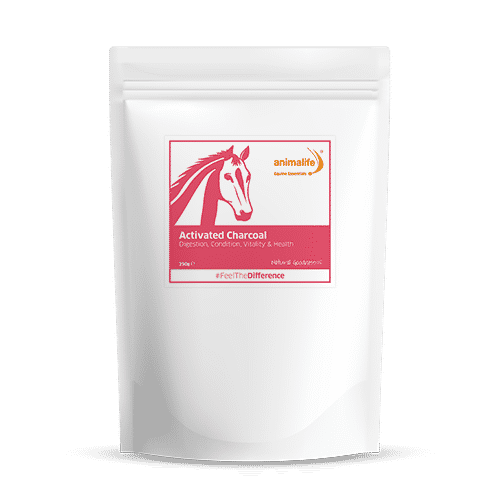
Activated Charcoal
Why do horses need activated charcoal?
Activated charcoal may help with a range of health concerns, including bloating, flatulence and minor cases of poisoning. This is because it absorbs potentially harmful toxins in the gut, allowing them to be passed through the digestive tract rather than being absorbed into the body. For horses, activated charcoal can be particularly helpful if they have begun grazing somewhere new or if you suspect they have ingested something they shouldn’t have.
How do I feed my horse activated charcoal?
Part of our Equine Essentials range, our activated charcoal comes as a finely milled powder that can be added to feed.
How much activated charcoal should I give my horse?
The amount of activated charcoal that you add to your horse’s feed will vary depending on the size of your animal. As a general guide, we recommend adding 10 grams of the powder per 100 kilograms of a horse’s body weight, per day.
Are there any side effects of activated charcoal for horses?
While completely safe for horses, prolonged use of activated charcoal can lead to constipation, and more seriously problems with dehydration. As it is such a porous substance, it can also affect how some medications are absorbed into the body, and so veterinary advice should be sought if your animal is taking any other medications or prescribed supplements.